
Artificial intelligence has come a long way from being just a buzzword in the tech space.
It has now created a serious stake for itself in the web3 niche, according to a recent report from DappRadar.
This report shows that AI-powered DApps saw massive growth in May of this year and are steadily catching up to Web3 giants like DeFi platforms and blockchain-based games.
The report shows a 23% increase in daily unique active wallets on AI-based crypto apps during this time, which reached a remarkable 4.8 million.
Here are the full details:
AI-driven decentralized apps are no longer side projects within the tech space.
Sara Gherghelas, an analyst at DappRadar, pointed out in the report that AI is not just a passing trend.
These applications are gaining ground and even competing with dominant sectors like DeFi and Web3 gaming.
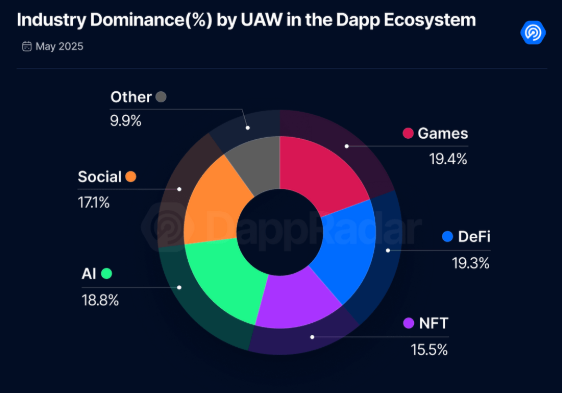
“AI decentralized apps are challenging gaming and DeFi for dominance in the DApp ecosystem,” she noted.
In the regular sense, DeFi and gaming DApps have been the most active on-chain platforms in terms of user numbers and total value locked (TVL).
However, with the rise of AI enhancements, this dynamic is shifting.
Users are more and more drawn to applications that can adapt, personalize experiences and automate complex interactions in a secure and decentralized way.
One of the best performers in the AI DApp space is LOL.
LOL had 2 million daily active wallets in May and leads the AI DApp category. The app uses an AI bot to analyze user laughter and determine their levels of happiness. It then rewards users with tokens based on its assessments.
This mix of emotional intelligence, entertainment, and incentive shows just how creative and diverse AI-powered DApps can be.
It's a perfect example of how AI can improve user engagement on decentralized platforms.
Interestingly, while LOL took the top spot, SubHub was a strong newcomer in May. This Dapp was developed by Dmail, and is an AI-enhanced Web3 notification and marketing platform.
The platform has attracted 82,000 daily unique active wallets during the month, and its strength lies in its integration of smart messaging and wallet-based targeting.
This approach has not only improved its usability, it has also shown the increase in overlap between social DApps and AI features.
Beyond individual applications, there's a bigger story underneath.
According to a Harris Poll cited in the DappRadar report, 77% of Americans believe that decentralized AI models are more beneficial than centralized alternatives.
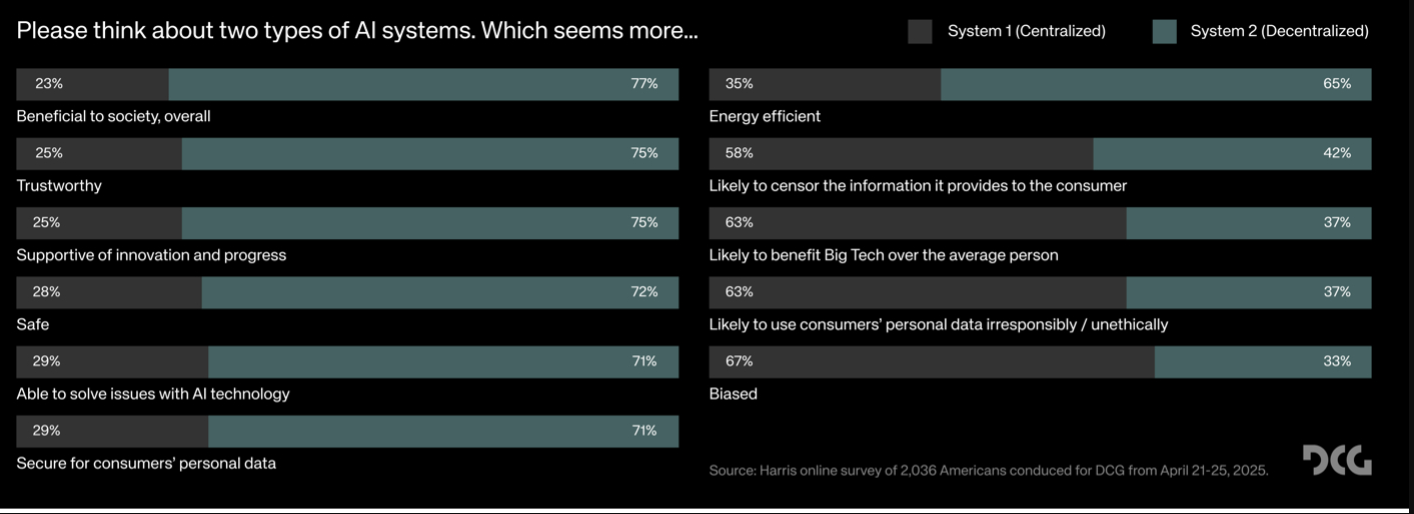
Additionally, 56% of respondents showed a preference for AI development to take place within decentralized frameworks.
These findings are a major echo of the principles of Web3, including transparency, user ownership and resistance to monopolies.
They indicate that public trust may more and more lie with open, decentralized AI systems rather than with tech giants that control centralized models.
The DappRadar report also pointed out several promising AI-related developments within the crypto space. Among them is the ThinkAgents.ai, with its open-source “Think Agent Standard.”
This Think Agent Standard protocol was designed to deploy autonomous AI agents across DeFi networks.
Tether, the company behind the USDT stablecoin, also revealed plans to build a decentralized AI platform.
This move is aimed at merging peer-to-peer communication with crypto transactions and even opening up new avenues for on-chain AI interactions.
These moves show that big players are beginning to see the promise in combining decentralized blockchain with powerful AI tools.
AI's presence in the decentralized space is more than just innovation. It is creating a new narrative for how we interact with blockchain technology.
Unlike earlier DApp cycles that were dominated by speculative DeFi tokens or play-to-earn mechanics, AI apps are more focused on utility, personalization and automation.
By embedding AI directly into DApps, developers can offer users smarter and faster experiences, all while maintaining the security and transparency of blockchain technology.